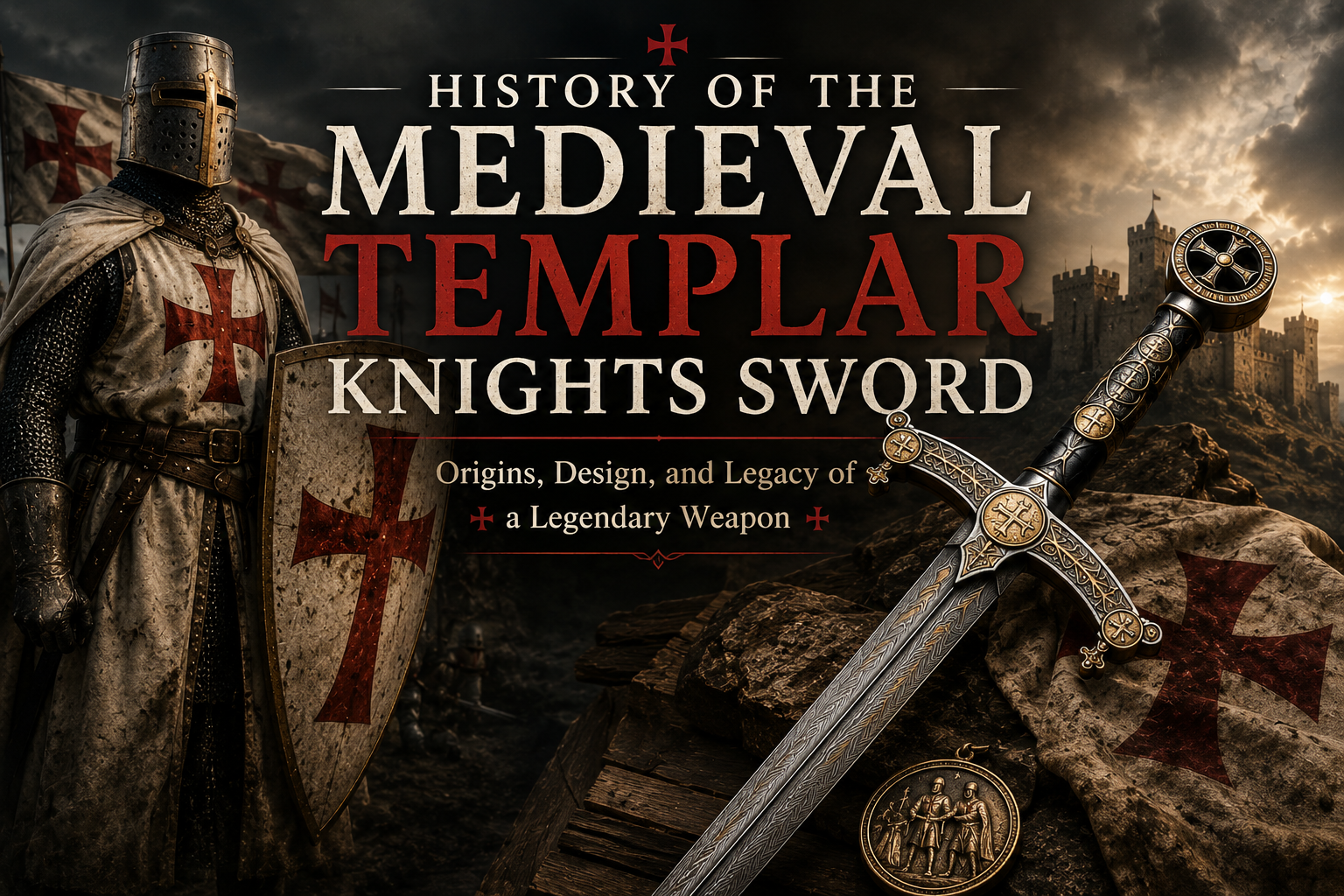
History of the Medieval Templar Knights Sword
The Medieval Templar Knights Sword is one of the most recognizable symbols of the Middle Ages. Associated with the legendary Knights Templar, this sword represented duty, discipline, and military service during the Crusades. While popular culture often surrounds the Templars with myths and hidden secrets, the historical reality is that their swords were practical battlefield weapons designed for combat rather than ceremonial treasures.
In this article, we’ll explore the history of the Medieval Templar Knights Sword, its design, purpose, and the legacy it continues to hold today.
Who Were the Knights Templar?
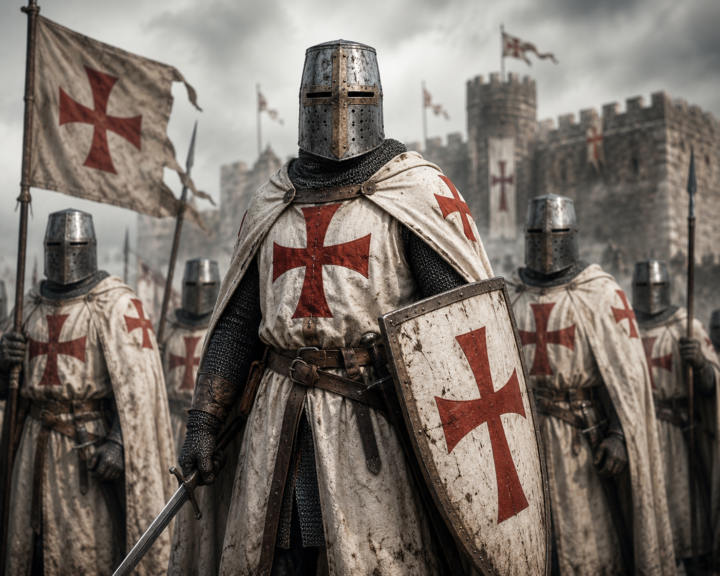
The Knights Templar, officially known as the Poor Fellow-Soldiers of Christ and of the Temple of Solomon, were founded around 1119 AD after the First Crusade.
Their original mission was to protect Christian pilgrims traveling to Jerusalem and other holy sites. Over time, they became one of the most respected military orders in medieval Europe.
The Templars combined the life of monks with that of professional soldiers. They followed strict religious rules while participating in military campaigns throughout the Holy Land.
The Origins of the Templar Sword
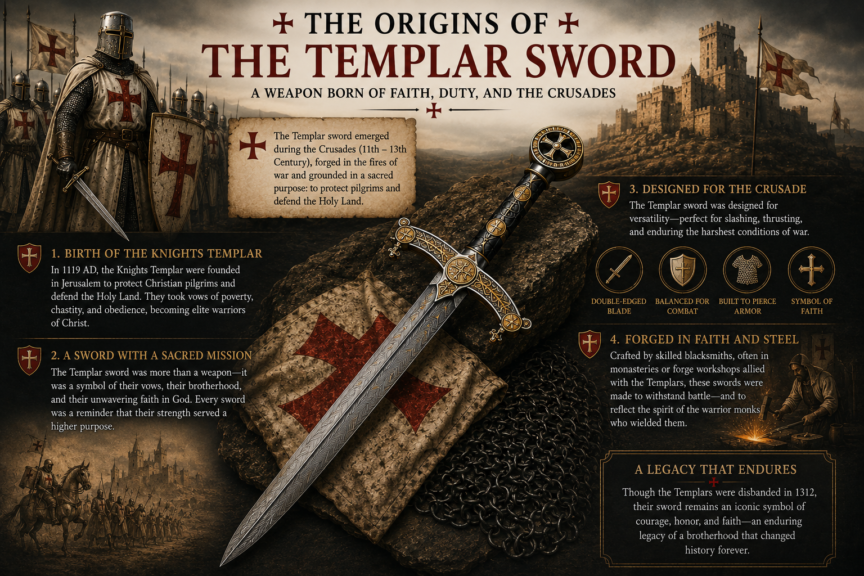
The swords carried by the Knights Templar were not unique designs created exclusively for the order. Instead, they reflected the typical European arming swords of the 12th and 13th centuries.
These swords were built to be:
Durable
Reliable
Easy to carry
Effective in close combat
Rather than elaborate decoration, Templar swords emphasized functionality and strength.
Design of the Medieval Templar Sword
A typical Templar sword featured several key characteristics.
Straight Double-Edged Blade
Most Templar swords had a straight blade sharpened on both edges, allowing effective cutting and thrusting.
Cross-Shaped Guard
One of the most recognizable features was the straight crossguard.
Besides protecting the hand, the sword’s overall shape resembled a Christian cross, making it an important religious symbol for many medieval knights.
Wheel Pommel
Many surviving medieval swords include a round or wheel-shaped pommel.
The pommel helped balance the weapon, improving control during combat.
One-Handed Grip
Most Templar swords were designed for one-handed use, allowing a knight to carry a shield in the other hand.
This combination was especially useful during cavalry charges and close combat.
Materials Used
Medieval swordsmiths forged these weapons using high-quality carbon steel available at the time.
Each sword required:
Forging
Heat treatment
Grinding
Polishing
Sharpening
A skilled blacksmith could spend many days completing a single sword.
How the Templar Sword Was Used
The Templar sword served as a versatile battlefield weapon.
Knights used it during:
Mounted combat
Infantry battles
Defensive engagements
Siege warfare
Although powerful, the sword was only one part of a knight’s equipment. Lances, spears, axes, and maces were also commonly used depending on the situation.
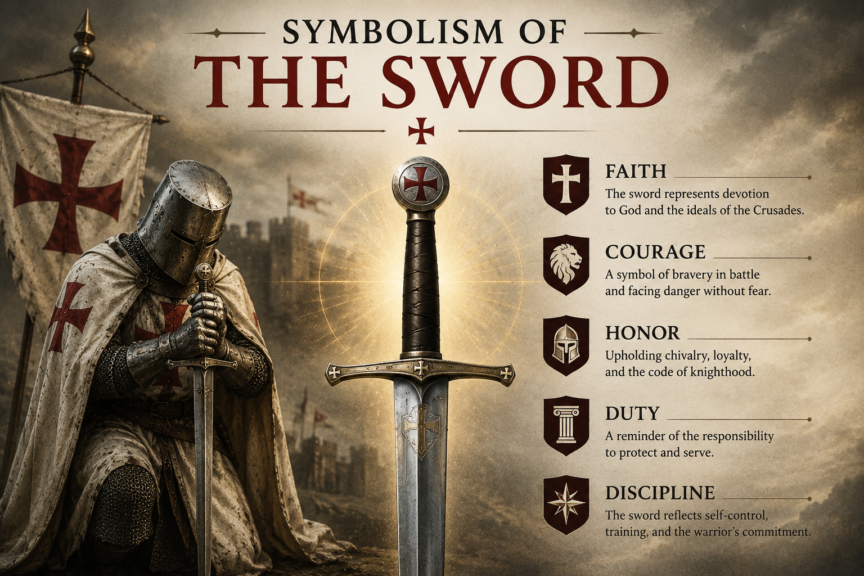
Symbolism of the Sword
For the Knights Templar, the sword represented more than military equipment.
It symbolized:
Courage
Honor
Faith
Discipline
Commitment to duty
Many medieval illustrations depict Templar knights carrying swords alongside shields bearing the famous red cross.
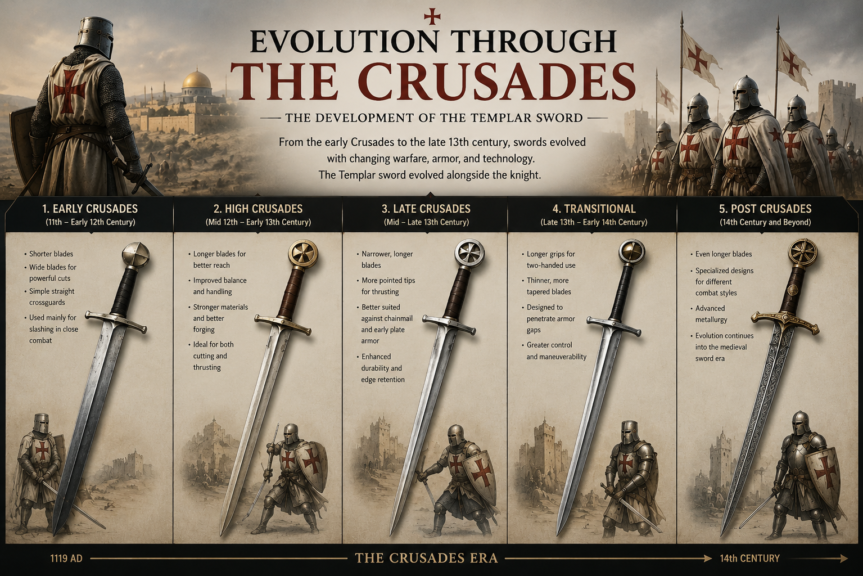
Evolution Through the Crusades
As armor technology improved, European swords gradually evolved.
Later medieval swords became:
Longer
More tapered
Better suited for thrusting into gaps in armor
The Templar sword evolved alongside these broader developments in medieval European sword-making rather than following a completely separate design tradition.
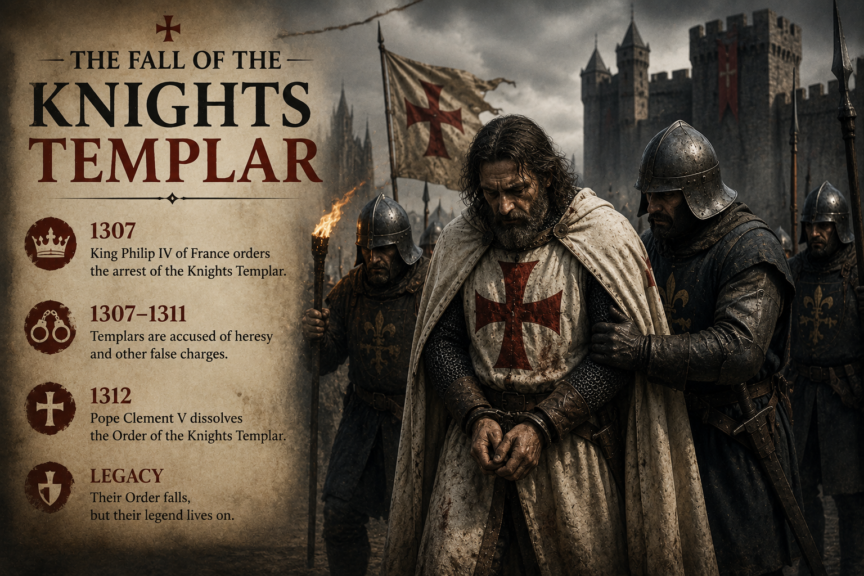
The Fall of the Knights Templar
The Knights Templar became wealthy and influential across Europe.
In 1307, King Philip IV of France ordered the arrest of many Templars, accusing them of various crimes. Historians generally regard many of these accusations as politically motivated.
In 1312, Pope Clement V formally dissolved the order.
Although the organization ended, the image of the Templar knight and his sword continued to inspire stories, artwork, literature, and historical research.
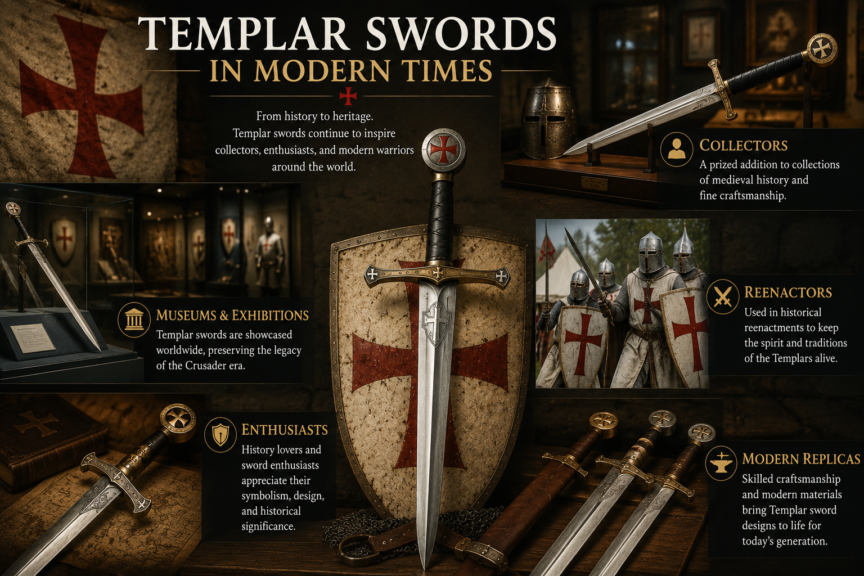
Templar Swords in Modern Times
Today, authentic medieval Templar swords are extremely rare and are preserved in museums or private collections.
Modern replicas are popular among:
History enthusiasts
Collectors
Museums
Educational displays
Medieval reenactors
Decorative art collectors
Many contemporary reproductions are inspired by historical designs while incorporating modern manufacturing techniques.
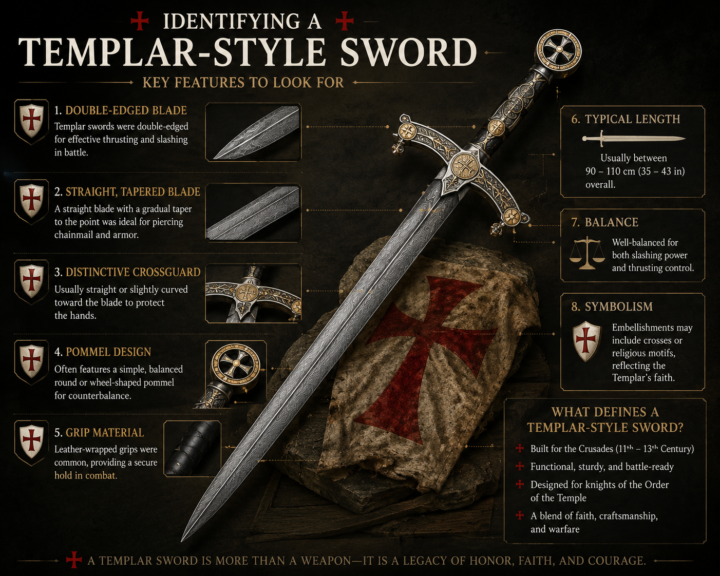
Identifying a Templar-Style Sword
A Templar-inspired sword often includes:
Straight double-edged blade
Cross-shaped guard
Wheel or disc pommel
Medieval European styling
Decorative cross motifs
Leather-covered grip
Historically inspired proportions
While designs vary, these features are commonly associated with Templar-style replicas.
Common Myths About Templar Swords
Myth 1: Every Templar Sword Was Identical
False. Individual swords varied depending on the period, blacksmith, region, and available materials.
Myth 2: Templar Swords Had Magical Powers
There is no historical evidence supporting legendary claims about mystical abilities or supernatural properties.
Myth 3: Every Sword Was Highly Decorated
Most battlefield swords prioritized practicality. Highly ornate swords were generally ceremonial or owned by wealthy nobles.
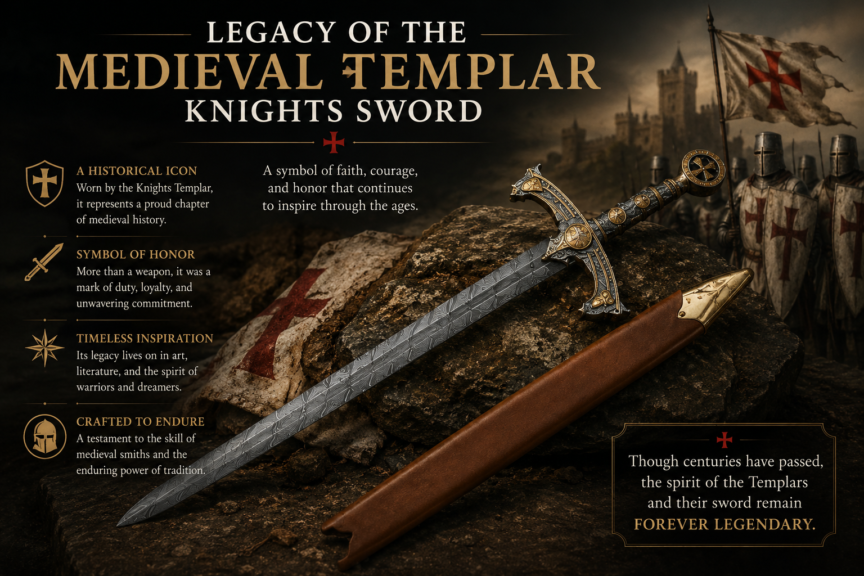
Legacy of the Medieval Templar Knights Sword
The Medieval Templar Knights Sword remains one of history’s most recognizable European swords. It represents the craftsmanship of medieval blacksmiths and the military traditions of the Crusader era.
Although surrounded by legends, its true historical importance lies in its role as a reliable battlefield weapon used by one of the most famous military orders of the Middle Ages. Today, it continues to capture the imagination of historians, collectors, and enthusiasts who appreciate medieval history and traditional sword craftsmanship.
Frequently Asked Questions
Did the Knights Templar have a unique sword?
No. The Knights Templar generally used European arming swords common during the 12th and 13th centuries, rather than a single exclusive design.
What was the Templar sword made from?
Most historical examples were forged from high-carbon steel using medieval blacksmithing techniques.
Why does the Templar sword have a cross-shaped guard?
The crossguard protected the user’s hand and also reflected the Christian symbolism associated with medieval knights.
Are original Templar swords still available?
A small number of medieval swords survive in museums and private collections, but directly attributing a specific sword to the Knights Templar is often difficult due to limited historical records.
Are modern Templar swords historically accurate?
Many modern replicas are inspired by historical medieval swords, though details such as decoration, dimensions, and materials may differ from surviving historical examples.
keywords: Medieval Templar Knights Sword, Templar Sword History, Knights Templar Sword, Medieval Sword History, Templar Knight Weapons, Crusader Sword, Medieval Arming Sword, Templar Sword Guide, Templar Sword Design,Medieval European Sword, history of the Knights Templar sword, medieval Templar sword history, origins of the Templar sword, how Templar swords were made, Templar sword during the Crusades, Templar-style sword guide, identifying a Templar-style sword, medieval crusader sword history, Knights Templar weapons explained, authentic Templar sword features, medieval knight sword history, Templar sword symbolism, Templar sword craftsmanship, history of Crusader swords, medieval European arming sword.